
Beginner
How to Get Better at Stumble Guys (Complete New Player Tutorial)
Key takeaways
- Practise movement on one map until it feels boring, then move on.
- Camera angle causes more losses than reaction speed.
- Track finishes, not wins, for your first fifty matches.
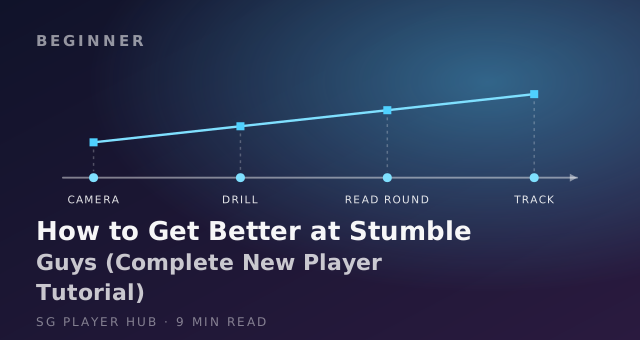
Improving at Stumble Guys is a two-week setup problem more than a talent problem. Fix your camera, drill one movement skill at a time, learn a three-second scan for each round type, and measure qualifications instead of crowns. This is the order to do it in, and why each step comes before the next.
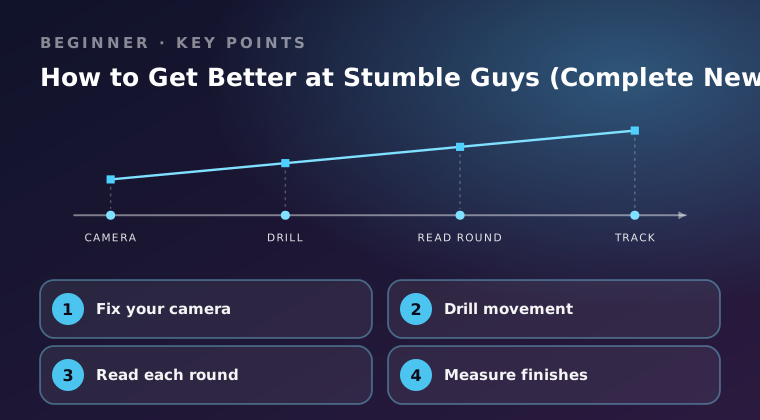
Fix your camera
Nothing else matters if you cannot see the next obstacle, so setup is days one and two. In the options menu, raise camera distance until you can see one obstacle past the one you are approaching, then adjust the move stick so it sits under the pad of your thumb rather than the tip.
- Keep the camera behind you at all times. If it swings sideways, drag it back before the next jump, not during.
- On narrow bridges and ledges, pull the camera back further so you can see the landing tile as well as the take-off tile.
- Leave sensitivity at the default for a full day before touching it. Most overshooting is a camera problem, not a sensitivity problem.
- Play on a stable connection and close background apps; a stutter during a jump reads exactly like a mistimed jump.
Week one continues with drills. Week two is where you take the same skills into real matches and start logging results.
Drill movement
Days three to five are ten minutes of drills before you play for real. One drill per skill, repeated until it is boring.
- Jump timing: load a race stage and clear every bar without slowing down. You pass when you can jump and keep the stick forward at the same time.
- Dive distance: find one gap, stand at its lip, and dive. Repeat until you clear it five times out of five, then find a slightly wider gap.
- Turning: run a full lap around a wide platform at full stick without falling. Ease the stick off a few degrees before each corner instead of holding full deflection.
- Recovery: after every knockdown, hold the stick forward while your character stands up so you are already moving when control returns.
- Contact: practise passing a crowd on its outside shoulder. You want to brush past players, never square into them.
Read each round
Week two adds a three-second scan at the start of every round. You are answering three questions: what type is this, where is the hazard, and which lane is empty.
- Races: pick the lane with the fewest players in front of you, not the shortest route on the map.
- Survival: note where the hazard starts its cycle and stand one tile outside its first sweep, with a second escape route behind you.
- Collection: go where nobody else is going. Two tokens alone are safer than five in a pile-up.
- Finals: the arena shrinks or the goal is single, so decide before the countdown ends whether you are taking the high ground or the outside line.
If you cannot answer all three questions before the gate opens, spend the first two seconds moving to open space rather than forward.
Measure finishes
Crowns are a terrible progress metric because only one of 32 players gets one. Qualifications are the number that actually moves. Keep a plain note on paper or in a notes app.
- Log qualifications out of every ten matches, and your target is to push that from four to seven.
- Log the stage that eliminated you. Three exits on the same map means that map is your homework, not bad luck.
- In races, log your finishing position too. Climbing from twentieth to tenth is real improvement even with no crown.
Review the log once a week and pick the single most common elimination. That is your only focus for the next seven days, and it is how the second week turns drills into finishes.
Final word
Two weeks is enough: camera and stick first, five short drills next, a three-second scan every round, then a log of qualifications rather than crowns. Follow that order and your results stop depending on which stages the match happen to pick for you.
Keep reading
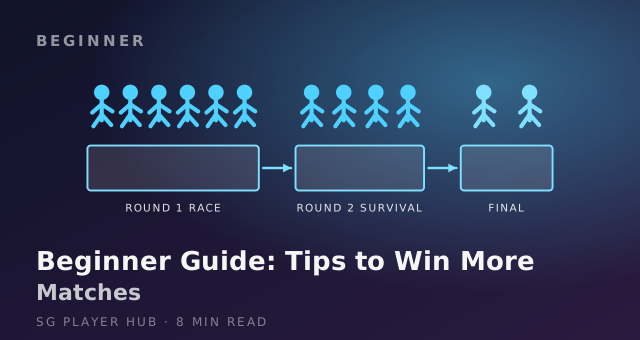
Stumble Guys Beginner Guide: Tips to Win More Matches
New to Stumble Guys? This beginner guide covers the controls, the three round types and the simple habits that turn random runs into steady wins.
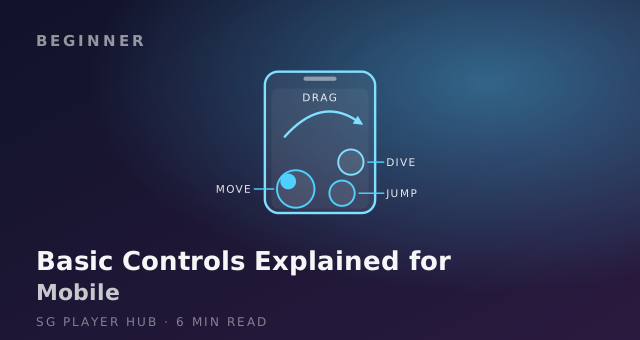
Stumble Guys Basic Controls Explained for Mobile
Every Stumble Guys control on mobile, explained: movement, jump, dive, grab and camera, plus sensitivity settings that suit touchscreens.

Common Mistakes New Players Make in Stumble Guys
The most common Stumble Guys mistakes new players make, from panic jumping to bad camera angles and crowded lines, plus the quick fix for each one.