
Mechanics
Stumble Guys Jump & Dive Mechanics Explained
Key takeaways
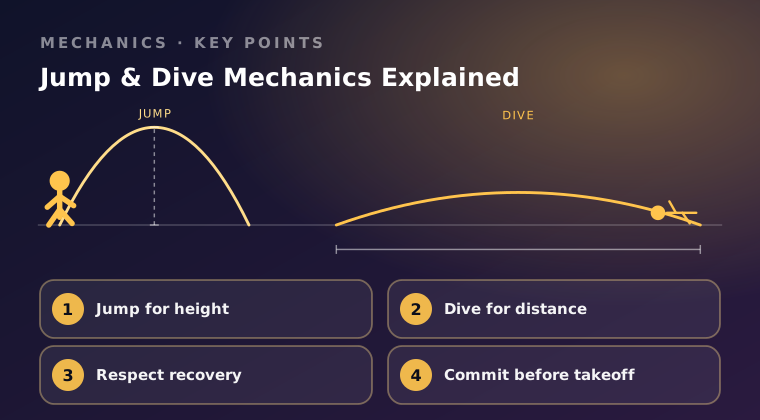
- Jump clears height; dive covers distance — they are not interchangeable.
- Dive recovery is roughly a second, so never dive into a crowd.
- Air control is limited: commit to your direction before you leave the ground.
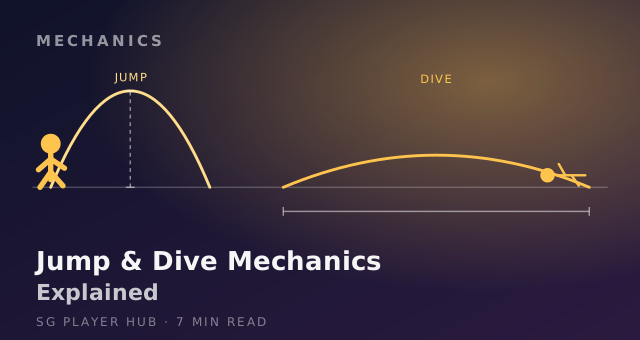
Jump and dive are two different tools, not one button with two speeds. Jump wins vertical contests and quick dodges over short gaps; dive wins horizontal distance and buys you reach at the cost of a long recovery. Learn which one the obstacle is asking for, and you stop losing races to sloppy landings.
Jump for height
Jump is your vertical tool. It lifts your bean high enough to clear low walls, hop onto platforms and float through spinning bars, but it travels almost no extra forward distance. Treat it as "up", not "far".
Reach for jump when the obstacle is tall rather than wide. A rising step, a stack of crates, a low rotating arm or a beam you need to land on top of all favour jump. It also recovers much faster than dive, so you can chain it into a second adjustment mid-air or immediately steer after landing.
The typical mistake is holding jump as a panic reaction to everything moving. On a bar swinging towards your chest, jumping late means you meet the bar at the top of your arc and get clipped anyway. Jump early, let it carry you over, and keep your stick aimed forward so the landing does not stall.
Dive for distance
Dive turns your bean into a projectile. You leave the ground at speed, travel noticeably further horizontally than a jump, and can grab ledges that a jump would fall short of. Wide gaps between platforms and collapsing tiles are dive territory.
The payoff is reach, though, not safety. A dive crosses maybe half a body more ground than a jump on flat ground, and much more when you enter it already sprinting. That is why it is the correct choice at the end of a ramp or a speed pad, where your momentum converts into real air.
Dive is also your recovery button when you mistime something. If a platform disappears under you mid-stride, a dive often snags the next one. Just remember it cannot gain height, so a dive at a wall is a dive into a wall.
Respect recovery
Recovery is the hidden cost of dive and the reason good players use it sparingly. When you land from a dive your bean is flat on the floor for a beat, unable to change direction, jump or climb. Every other decision in this game is downstream of that beat.
- Landing a dive into a crowd means getting trampled while you are face-down.
- Landing one on a narrow beam means your recovery happens off the side of it.
- Landing one just before a climbing section means you arrive unable to grip anything.
Safety comes from choosing where the recovery ends. Aim dives at open ground you can see all of, never at a spot you have not yet scouted, and never into a group of players who will happily run over you.
| Move | Best used for | Distance | Recovery | Common mistake |
|---|---|---|---|---|
| Jump | Clearing tall or rising obstacles, landing on platforms | Short forward, strong upward | Very fast, chainable | Jumping late at swinging bars |
| Dive | Crossing wide gaps, saving a mistimed step, extending a sprint | Long forward, flat arc | Slow, leaves you helpless | Diving into crowds or onto beams |
Commit before takeoff
Both moves lock their path once you are airborne. You can nudge with the stick, but you cannot undo the choice, so the decision has to happen on the ground. Look at the gap, pick your move, and press.
Practise reading each obstacle from two steps back. Ask one question: is this asking me to go over something, or to reach something? Over means jump, reach means dive. Answering while you still have footing is the whole skill.
A good drill builds the habit: load a course with a single repeating gap type, run it ten times forcing yourself to call "jump" or "dive" aloud one second before each button press. Ten clean laps where the spoken call matches the input will make the read automatic in real matches.
Final word
Jump goes up, dive goes far, dive costs you a recovery beat, and every decision is made before you leave the ground. Drill the gap read in isolation and both buttons stop feeling like guesses during a race.
Keep reading
Advanced Movement Tricks You Should Learn
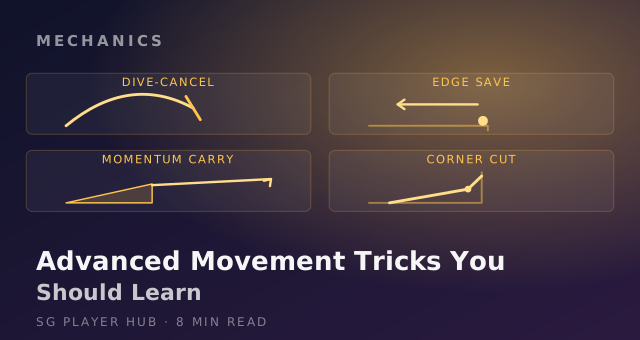
Advanced Stumble Guys movement: dive-cancels, edge saves, momentum carries and corner cuts that shave seconds off every race round.
How to Survive Longer in Elimination Rounds
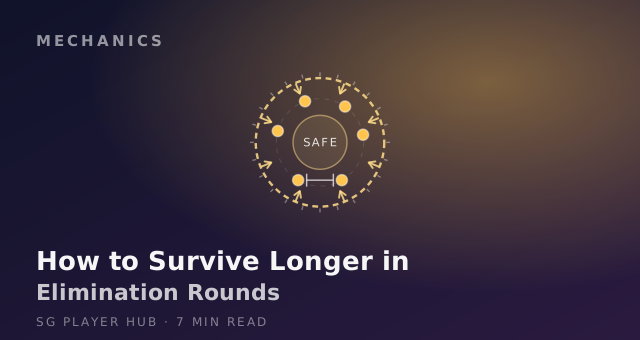
Elimination rounds remove the slowest players. Learn the spacing, hazard timing and reset habits that keep you alive to the final whistle.
Best Strategies For Team Mode in Stumble Guys
Team mode scores the squad, not the player. Use these strategies for lane choice, revive timing and communication to carry a mixed team.