
Mechanics
How to Survive Longer in Elimination Rounds
Key takeaways
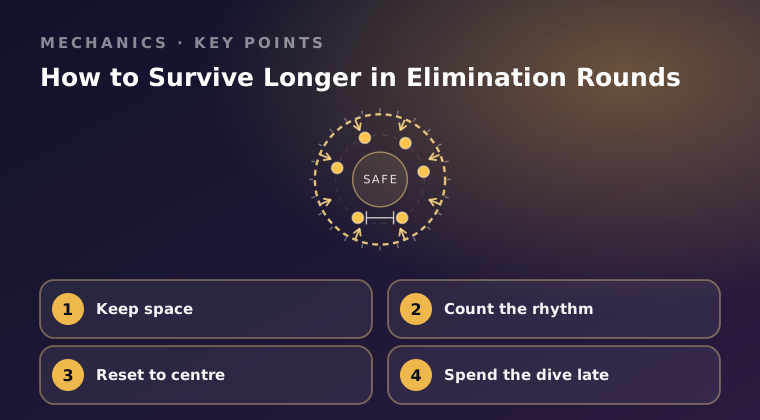
- Space is the resource, not speed — keep a clear tile in every direction.
- Hazards run on a rhythm; count it and you stop guessing.
- Reset to the centre after every near miss; the edge is where runs end.
Elimination rounds rarely kill you with a single dramatic obstacle; they kill you with crowding, mistimed hazards and panic dives. Extend your run with four habits: hold space, read the timing pattern, drift back towards the middle, and keep your dive in reserve. None of these require fast reflexes, only restraint.
Keep space
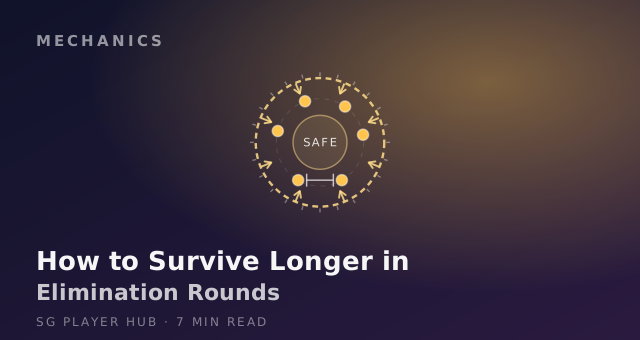
Survival rounds punish density. When ten beans share one tile, every wobble becomes a shove, every shove becomes a fall, and the whole group goes down together. Your first job is not to outplay the course but to find a patch of it you largely have to yourself.
Space works because most knockouts here come from other players rather than from hazards. Standing one body-width away from the nearest rival removes most of the random contact, and if someone does get launched into you, you have room to absorb the hit and rebalance.
In practice, pick an edge sector rather than the obvious middle. Choose your spot at the start while everyone else sprints for the centre, then hold it. You can always step inward later; reclaiming a spot you never took is much harder.
Drill: play a survival round with one rule, never stand within one body-length of another player. Count how many knockouts you cause by accident; the number should drop to zero within a few runs.
Count the rhythm
Hazards in these rounds are almost always periodic. Bars sweep, blocks punch, tiles drop and floors tilt on a repeating cycle, which means each one is a timing puzzle rather than a reaction test. Counting turns a scary obstacle into a schedule.
- Watch one full cycle before committing, even if it costs you a second.
- Count out loud: one, two, three, go. Speech stops you from guessing.
- Move on the beat you counted, not when you feel ready.
- Re-check the count after anything knocks you off rhythm, since crowds desynchronise you fast.
This pays most on sweeping-bar and tilting-floor rounds where the pattern never changes. It is worth less on rounds with genuinely random elements, where reading the crowd instead is the better skill.
Drill: stand still near a hazard and count three clean cycles without moving. Then time your entry for the third. Once you can do that reliably, add movement between cycles.
Reset to centre
Centre is survivable real estate. After every hazard passes, your instinct will be to stay where you landed, but scattered positions at the edges are exactly where the next sweep catches you. Resetting towards the middle between waves is routine maintenance that keeps options open.
The reason is simple geometry. From the middle you can reach any safe pocket in roughly one step; from an outer corner several routes are already gone before you start moving. Centre also means fewer bodies, since crowds naturally accumulate near whatever just happened.
Treat the reset as a habit rather than a decision. As soon as a threat passes and the floor is stable, spend the breathing room walking back to the middle, then hold until you need to leave again. Do not sprint; a controlled walk leaves you balanced if something unexpected appears.
Drill: for one whole round, make your position after each hazard the only thing you track. If you finish each wave outside the middle third, you are drifting, and shortening that drift is the fix.
Spend the dive late
Your dive is the most expensive button you own, because you cannot act during the recovery. Using it early in a wave means lying face-down while everyone else reacts to whatever comes next, which is how players get eliminated by threats they never saw.
Hold it for genuine emergencies. A tile vanishing under your feet, a misjudged gap, a shove that sends you toward open air — those are dive moments. Crossing a gap you can already walk, or diving forward to gain one body-length in a crowd, is not.
Drill: play three full rounds allowing yourself one dive each, no more. Being forced to choose teaches you quickly which situations actually needed it and which ones your feet could have handled alone.
Final word
Survival is mostly patience. Hold your space, read the cycle before you move, walk back to the middle between waves, and save the dive for the moment failure is otherwise certain.
Keep reading
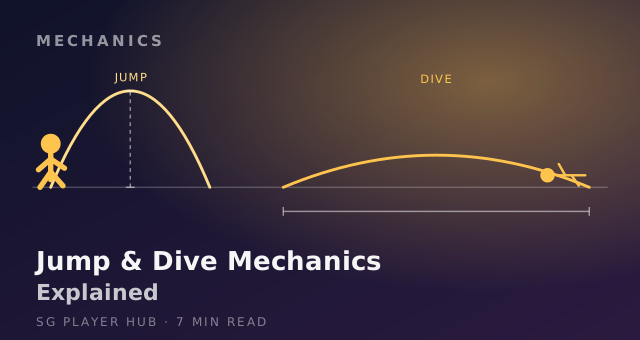
Stumble Guys Jump & Dive Mechanics Explained
How jump and dive really work in Stumble Guys: distance, recovery, air control and the situations where a dive beats a jump every time.
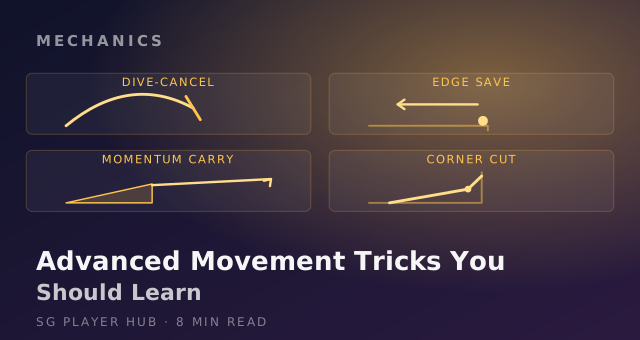
Advanced Movement Tricks You Should Learn
Advanced Stumble Guys movement: dive-cancels, edge saves, momentum carries and corner cuts that shave seconds off every race round.
Best Strategies For Team Mode in Stumble Guys
Team mode scores the squad, not the player. Use these strategies for lane choice, revive timing and communication to carry a mixed team.